
I build websites for medical practices in Queens. The ones booking out six weeks do something their competitors don’t.
They answer a simple question before they touch their marketing budget: Where do my patients actually decide?
The answer isn’t your waiting room. It’s Instagram.
The Patient Journey Happens Before the Phone Rings
Here’s what I see when I audit a medical practice’s digital presence: beautiful website, strong Google reviews, empty Instagram profile.
And here’s what the data shows: 84% of patients check online reviews before selecting a new doctor. But reviews only tell half the story.
35% of patients have chosen a physician based on social media presence. Not credentials. Not location. Social media.
Your next patient Googles you. They read your reviews on Healthgrades. Then they check Instagram to see if you’re real.
No profile? No face? No trust.
They book the other doctor.
 Best Practice #1: Post Your Face and Voice Consistently
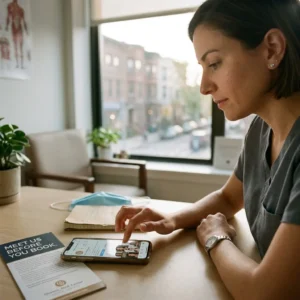 Best Practice #1: Post Your Face and Voice Consistently
The most effective medical practices on Instagram do something uncomfortable at first. They show up as humans.
You don’t need production value. You need consistency.
Post at least three times per week. Show your face. Use your voice. Answer one question your patients ask in the exam room.
The healthcare social media market hit $12.82 billion in 2024 and will reach $23.37 billion by 2033. That growth reflects a fundamental shift in patient behavior.
Patients want to know who you are before they meet you.
Instagram lets you introduce yourself 1,000 times a day without repeating the same conversation.
What to Post
Start with the questions you hear most often:
- “How long does recovery take?”
- “What should I expect at my first visit?”
- “Is this procedure covered by insurance?”
- “When should I be concerned about this symptom?”
Record a 30-second answer. Post it. Move on.
You’re not creating content for entertainment. You’re removing friction from the decision-making process.
Best Practice #2: Cross-Reference Your Profiles Across Platforms
Patients don’t stop at one platform. They check multiple sources before booking.
77% of patients use Google reviews when deciding where to go for care. But they also check WebMD, Healthgrades, and Instagram.
Your Instagram profile should reinforce what your reviews already say.
If your Google reviews highlight your bedside manner, show that on Instagram. If patients mention your clear explanations, post educational content that demonstrates exactly that quality.
This isn’t about creating a brand. It’s about being consistent across the places patients already look.
The Cross-Platform Checklist
Make sure these elements match across every platform:
- Your name and credentials
- Your practice location
- Your specialties and services
- Your contact information
- Your profile photo
Inconsistency creates doubt. Patients move on.
Best Practice #3: Respond to Every Comment and Direct Message
Here’s a number that changes behavior: 59.48% of patients are more likely to choose a provider who responds to both positive and negative reviews.
The same principle applies to Instagram.
When someone comments on your post, respond within 24 hours. When someone sends a direct message asking a question, answer it.
You’re not just managing a profile. You’re creating dozens of micro-interactions that build trust before the first appointment.
I’ve watched practices double their appointment requests simply by responding to Instagram comments consistently.
Patients don’t expect perfection. They expect acknowledgment.
What to Say When You Respond
Keep responses short and specific:
- “Great question—I’ll cover this in a post next week.”
- “Thanks for sharing your experience. I’m glad we could help.”
- “Send me a DM and I’ll point you to the right resource.”
You’re not providing medical advice in comments. You’re showing you’re present and accessible.
Best Practice #4: Create Educational Content That Patients Screenshot and Share
The best marketing you’ll ever do is the marketing your patients do for you.
Patients screenshot posts they find valuable and send them to family. Free word of mouth. Zero ad spend.
75% of Instagram users take action in response to content on the platform. That action includes booking appointments.
But you have to give them something worth sharing.
The Content Formula That Gets Shared
Focus on posts that answer these questions:
- “When should I worry about this symptom?”
- “What’s the difference between these two treatment options?”
- “What should I do before my first appointment?”
- “How do I prepare for this procedure?”
Format matters. Use clear text overlays. Keep videos under 60 seconds. Make the first three seconds count.
A single educational reel hits more eyes in 48 hours than your waiting room sees in a year.
That’s not hype. That’s math.
Best Practice #5: Connect Your Instagram Activity to Your SEO Strategy
Your website ranks higher when Google sees consistent activity tied to your name across platforms.
SEO and social work together.
When you post on Instagram, you’re creating signals that tell search engines you’re active, relevant, and trusted. When patients engage with your content, Google notices.
I’ve seen medical practices improve their local search rankings by 3-5 positions just by maintaining an active Instagram presence for 90 days.
How to Link Social Activity to Search Performance
Make these connections explicit:
- Include your website URL in your Instagram bio
- Link to specific service pages in your Instagram Stories
- Use location tags in every post
- Mention your practice name in captions
- Encourage patients to tag your practice in their posts
Google doesn’t rank Instagram posts. But it does notice when your brand appears consistently across multiple platforms with high engagement.
Your digital footprint is cumulative. Every platform feeds the others.
Best Practice #6: Audit Your Profile Like a Patient Would
Pull out your phone right now. Search for your practice on Instagram.
What do you see?
If your profile is empty, you’re losing patients to competitors who show up.
If your last post was six months ago, patients assume you’re not accepting new patients or your practice is struggling.
Run this audit every month:
- Is your profile photo clear and professional?
- Does your bio explain what you do and who you serve?
- Is your contact information current?
- Have you posted in the last seven days?
- Do your recent posts answer patient questions?
- Are you responding to comments and messages?
Fix what’s broken before you spend another dollar on paid advertising.
Best Practice #7: Track What Actually Drives Appointments
You can’t improve what you don’t measure.
Ask every new patient: “How did you hear about us?”
When they say “Instagram,” ask a follow-up: “What made you decide to book?”
I’ve heard the same answers dozens of times:
- “I liked that I could see your face before coming in.”
- “Your post answered the exact question I had.”
- “You seemed more approachable than other doctors.”
- “I saw you respond to comments and knew you’d listen to me.”
These aren’t vanity metrics. They’re business outcomes.
Track which types of posts lead to appointments. Double down on what works. Stop doing what doesn’t.
The Competitive Reality You’re Facing
The doctor down the street isn’t better than you.
They’re just easier to find.
Only 37% of patients consider their doctor their preferred source for health information. They’re turning to social media instead.
You can fight that trend or you can meet patients where they already are.
I work with medical practices across NYC. The ones growing fastest aren’t the ones with the biggest marketing budgets.
They’re the ones showing up consistently on the platforms their patients use every day.
Start With One Post This Week
You don’t need a content calendar. You don’t need a social media manager. You don’t need to go viral.
You need to post one thing this week that helps a patient make a decision.
Answer the question you heard most often today. Record it on your phone. Post it to Instagram.
That’s the best practice that matters most: showing up.
If you’re a doctor in NYC and your Instagram profile is empty, fix this before you touch anything else in your marketing.
Your next patient is scrolling right now. Make sure they find you.