
I’ve spent years helping service businesses in New York City dominate local search results. Medical practices face unique challenges other businesses don’t encounter.
The numbers tell a clear story: 77% of patients begin their healthcare search on Google, and online search officially surpassed physician referrals in 2023 as the leading way Americans find new doctors.
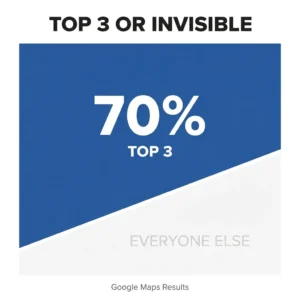
The top three positions in Google’s Local Pack capture roughly 70% of clicks. If your practice isn’t visible there, you’re invisible to most potential patients.
Here’s what I’ve learned about getting medical practices to rank higher on Google Maps in New York City.
 Why Your Google Business Profile Category Matters More Than Everything Else
 Why Your Google Business Profile Category Matters More Than Everything Else
I start every medical practice optimization with one question: what’s your primary category?
The primary Google Business Profile category is the #1 ranking factor for Local Pack according to the 2026 Local Search Ranking Factors survey. This single selection carries more weight than your reviews, your website content, or your citation count.
Most doctors I work with have never thought about this.
You need to select the most specific category describing your practice. A dermatologist should choose “Dermatologist” not “Doctor” or “Medical Clinic.” A pediatric cardiologist should choose “Pediatric Cardiologist” if available, not “Cardiologist.”
Google trusts specificity. The more precisely your category matches what patients search for, the higher you’ll rank for those searches.
You get secondary categories, but your primary category drives your core visibility. Choose wrong here and you’re fighting uphill on everything else.
How to Optimize Your Google Business Profile Completely
Google Business Profile signals account for 32% of local ranking weight in 2026. This is the single highest-leverage activity for most medical practices.
Here’s what complete optimization looks like:
Fill Every Single Field
I see incomplete profiles constantly. Missing hours, no description, empty service list, no appointment URL.
Google rewards completeness. Fill out your business description with natural language explaining what you do and who you serve. Add all your services individually. Include your appointment booking link. Upload your logo and cover photo.
Every empty field is a missed ranking opportunity.
Add High-Quality Photos Consistently
Upload photos of your office, your staff, your equipment, your waiting room. Patients want to see where they’re going before arrival.
I recommend adding at least 3-5 new photos every month. Google sees this as a signal your business is active and engaged.
Post Regular Updates
Google Posts appear directly in your Business Profile. Use them to share health tips, announce new services, highlight patient success stories, or promote seasonal offerings like flu shots.
Post at least once per week. These updates show Google your practice is active and relevant.
Enable Messaging and Respond Quickly
Turn on Google Business Profile messaging. When potential patients message you, respond within an hour when possible.
Response time affects your ranking. Fast responses signal to Google you’re an active, reliable business.
Add Your Service Area
If you serve patients beyond your immediate neighborhood, add your service areas. This helps you appear in searches from those locations.
For NYC doctors, you might serve multiple boroughs or specific neighborhoods. List them all.
The Review Strategy That Works for Medical Practices
Reviews carry 16% of total local ranking weight. But the real impact goes beyond the algorithm.
87% of consumers read online reviews for local businesses in 2026. Businesses with fewer than 10 reviews or an average rating below 4.0 stars face a measurable conversion penalty.
I’ve found review velocity matters more than total count. A practice with 200 reviews but none in the last three months gets outranked by a competitor with 80 reviews rolling in consistently.
Google sees steady new reviews as a sign your business is active and trusted.
How to Get More Patient Reviews
You need a system. Asking randomly doesn’t work.
Send a review request email or text to every patient 24-48 hours after their appointment. Include a direct link to your Google Business Profile review page. Make it one click.
Train your front desk staff to mention reviews during checkout. A simple “If you had a good experience today, we’d appreciate a Google review” works.
Don’t offer incentives. Google prohibits review gating and incentivized reviews. Ask genuinely and make it easy.
Respond to Every Review
I respond to every review my clients receive. Positive or negative.
Thank patients for positive reviews. Address concerns in negative reviews professionally and offer to resolve issues offline.
Response rate affects your ranking. This also shows potential patients you care about feedback and patient experience.
Why NAP Consistency Still Matters in 2026
Name, Address, and Phone consistency is critical. Inconsistent data weakens entity trust and reduces ranking potential.
Google expects accurate, synchronized business information across all platforms.
I audit every citation for medical practices I work with. Your practice name, address, and phone number must match exactly across:
- Your Google Business Profile
- Your website
- Your social media profiles
- Healthcare directories like Healthgrades, Zocdoc, and Vitals
- General business directories like Yelp and Yellow Pages
Even small variations hurt you. “123 Main St” vs “123 Main Street” or “(212) 555-1234” vs “212-555-1234” create confusion for Google’s algorithm.
Fix these inconsistencies first. They’re foundational.
How to Optimize Your Website for Local Medical Searches
Your website works with your Google Business Profile to strengthen your local presence. Over 60% of healthcare searches happen on mobile devices, and users look at map listings first on their phones.
Your website needs to support your local ranking, not work against it.
Create Location-Specific Pages
If you have multiple office locations, create a dedicated page for each location. Include the full address, phone number, hours, directions, and parking information.
For single-location practices, make your location prominent on your homepage and create a detailed “Visit Us” or “Location” page.
Add Schema Markup
Schema markup helps Google understand your website content. Use LocalBusiness schema and MedicalBusiness schema to mark up your practice information.
Include your name, address, phone number, hours, accepted insurance, and medical specialties in your schema markup.
This structured data reinforces the information in your Google Business Profile and helps Google connect your website to your local listing.
Optimize for Medical Keywords
Your website content should target the specific medical services you offer combined with location qualifiers.
Instead of generic content about “our practice,” create pages targeting searches like:
- “Pediatrician in Upper East Side”
- “Dermatologist near Central Park”
- “Cardiologist in Manhattan”
- “Family doctor in Brooklyn Heights”
Use these phrases naturally in your page titles, headings, and content. Don’t stuff keywords. Write for patients first, search engines second.
Display Your Credentials Prominently
Google applies stricter YMYL (Your Money or Your Life) guidelines to healthcare businesses. Provider credentials, board certifications, medical school education, and years of experience carry more weight for medical practices than other local businesses.
Create detailed provider bio pages that include:
- Medical school and residency
- Board certifications
- Years in practice
- Hospital affiliations
- Professional memberships
- Published research or speaking engagements
Expertise signals matter for medical practices. Google wants to rank authoritative, trustworthy healthcare providers.
The Proximity Factor You Can’t Control (But Need to Understand)
Proximity to the searcher accounts for roughly 55% of ranking decisions according to Whitespark’s 2026 survey. This is the single most important factor in local rankings.
You don’t control where patients search from. But you do control everything else.
This is why the controllable factors matter so much. Your Google Business Profile optimization, your review velocity, your NAP consistency, your website content. These are the levers you get to pull.
A practice three blocks away with a mediocre Google Business Profile might outrank you for a searcher standing next to their office. But you’ll outrank them for everyone else if your optimization is stronger.
What Makes Medical Practice SEO Different
I’ve worked with service businesses across dozens of industries. Medical practices face unique challenges requiring specific strategies.
Insurance and Accepted Payments Matter
List every insurance plan you accept in your Google Business Profile and on your website. Patients filter by insurance coverage.
If you accept Medicare, Medicaid, or specific private insurance plans, make this information prominent and easy to find.
Appointment Booking Integration
Google Business Profile actions increased 41% year-over-year. Calls, direction requests, website visits, and booking actions from GBP listings surged between 2025 and 2026.
Add a direct appointment booking link to your Google Business Profile. Make it one click from your profile to a booking page.
The easier you make it to book, the more patients you’ll convert from your listing.
Service-Specific Landing Pages
Create dedicated pages for each major service you offer. Don’t lump everything under “Our Services.”
A dermatology practice should have separate pages for acne treatment, skin cancer screening, cosmetic procedures, and pediatric dermatology.
Each page targets different patient searches and gives you more opportunities to rank.
How to Track Your Google Maps Ranking Progress
I track three metrics for every medical practice client:
Local Pack rankings: Where you appear in the map results for your target keywords. Track your position for 10-15 core search terms like “dermatologist near me” or “pediatrician Upper East Side.”
Google Business Profile insights: How many people view your profile, how many click your website, how many request directions, how many call. These numbers tell you if your visibility is converting to patient actions.
Review velocity: How many new reviews you receive per month. Aim for at least 3-5 new reviews monthly for small practices, 10+ for larger practices.
Rankings fluctuate daily. Focus on the trend over weeks and months, not day-to-day changes.
The Timeline for Seeing Results
Google Business Profile optimizations show results within 2-4 weeks. You might see ranking improvements for some keywords almost immediately after completing your profile.
Review accumulation takes longer. Building from 5 reviews to 50 reviews might take 6-12 months with a consistent request system.
Website optimizations typically show results in 2-3 months as Google crawls and indexes your changes.
This isn’t a quick fix. It’s sustained effort compounding over time.
What to Do Right Now
Start with your Google Business Profile. Log in today and complete every field. Add photos. Create your first post. Enable messaging.
Audit your NAP consistency across the web. Fix any variations you find.
Implement a review request system. Send an email or text to every patient after their appointment with a direct link to leave a review.
These three actions will move your ranking more than anything else in the next 30 days.
I help medical practices in New York City build websites and implement SEO strategies attracting more patients. If you want your practice to rank higher on Google Maps, I’ll show you exactly what needs to happen.
The practices dominating local search results in 2026 aren’t doing anything magical. They’re doing the fundamentals consistently and completely.
Your patients are searching for you right now. The question is whether they’ll find you or your competitor three blocks away.